




Alternative to ETICS
Insulation with 1 mm.
Save energy without thick insulation boards – a modern solution for renovation and new builds. Up to 25 years manufacturer warranty.
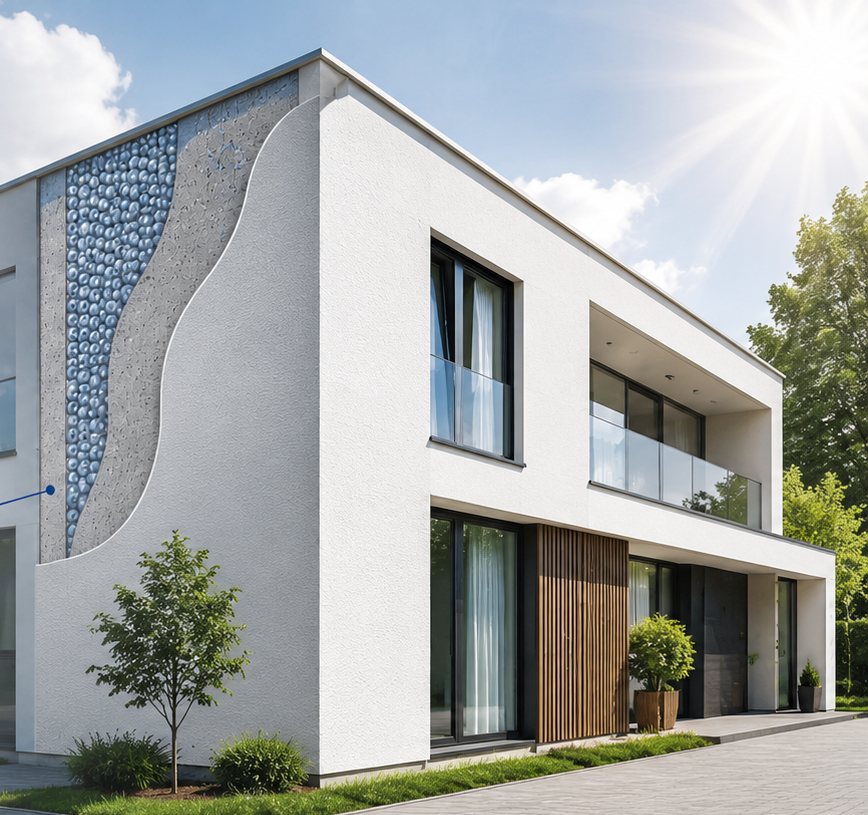


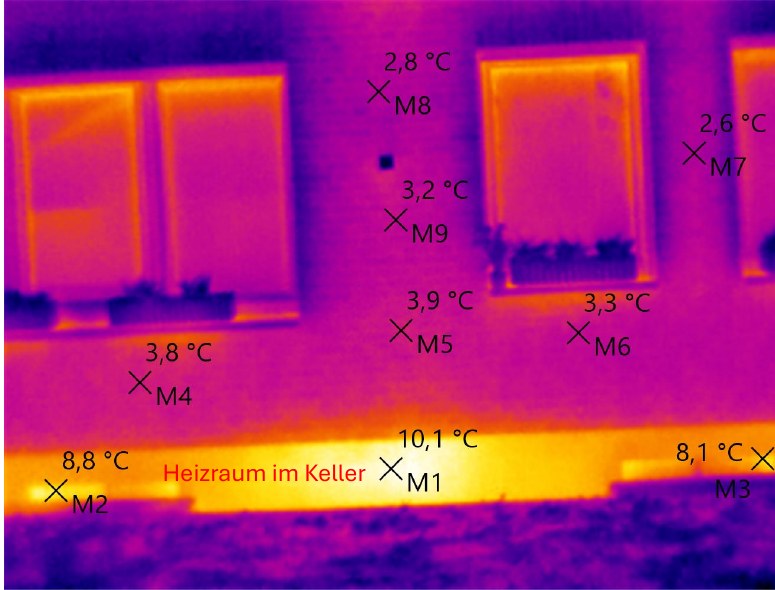
Four reasons why insulating with Nano facade insulation makes sense right now.

Rising energy costs
Poorly insulated buildings noticeably lose heating energy – costs keep rising year after year.

Growing renovation pressure on existing buildings
Energy performance requirements for existing buildings keep rising – anyone renovating needs future-proof solutions.

Classic insulation: thick & expensive
Conventional systems require many centimetres of build-up, high material costs and elaborate fixing.

Weeks of construction work
Scaffolding, drying times, elaborate adjustments to window sills, roof overhangs and downpipes – classic renovation ties up time and nerves.
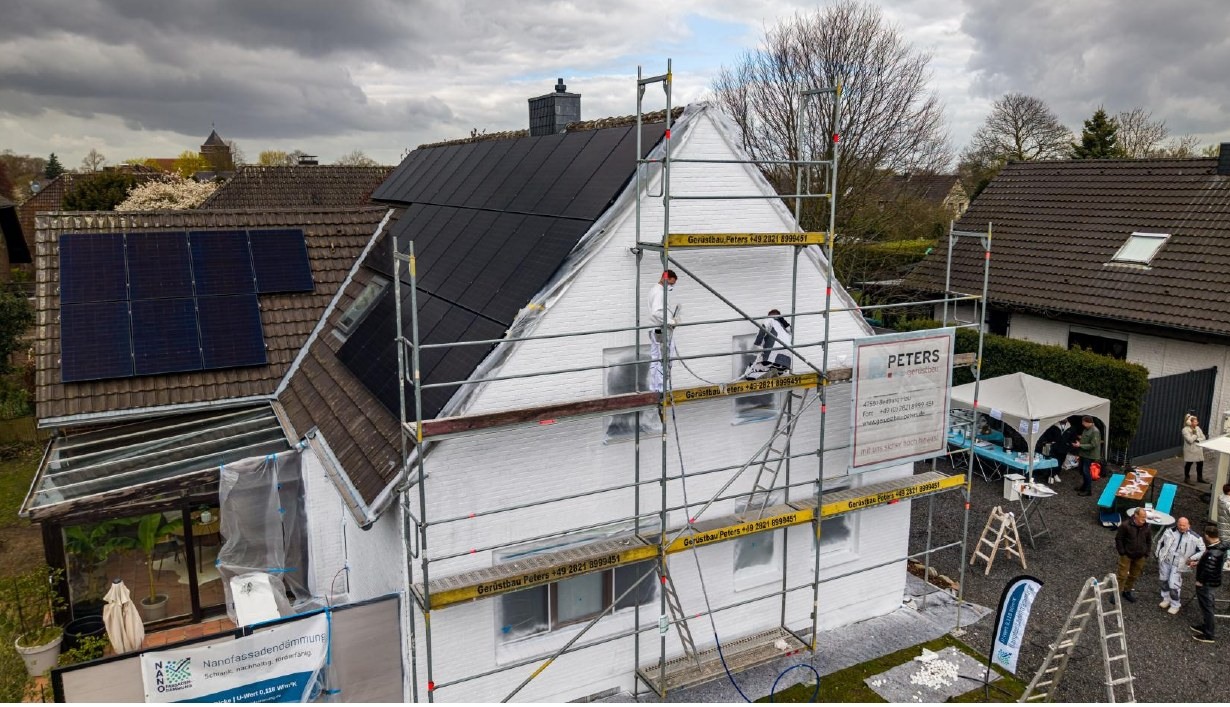
Thermal imaging measurement at the Bedburg-Hau show house
Independent expert assessment: thermal images of a residential house in Bedburg-Hau before and after coating with the thermo-reflective facade.
View more references →Insulation performance you can measure.
PScoat is a functional thin-film coating (approx. 0.5 mm) – not ordinary paint. In a continuous in-situ measurement with the Testo 635-2, around 42,000 readings were recorded overnight on a real historic solid-masonry wall, with U-values down to 0.14 W/(m²K).
View the measurement data on NANO.DOCS →* Value determined on the examined component under documented boundary conditions and derived from the in-situ measurement – not a building-authority design value and not generally transferable to other wall structures.
Key benefits
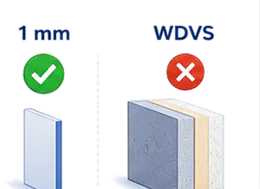
Just 1 mm layer thickness
100x thinner than classic insulation – approx. 1 mm instead of 10–20 cm of classic insulation thickness.

Ready in just a few days
Significantly shorter installation time than classic ETICS, no structural alterations required.

Facade appearance preserved
The existing facade look is preserved – ideal for older buildings and listed buildings.

25-year manufacturer warranty
Up to 25 years manufacturer warranty from PSCoat on the material, plus 5 years statutory warranty on professional installation.

No structural alterations, usually no building permit
Applied directly to the existing facade – without structural intervention and usually without a separate building permit.

Often 10 to 15% cheaper than classic insulation
Despite the high-tech coating, often cheaper than classic multi-layer insulation systems – thanks to lower labour and material costs.
How Nano facade insulation works.
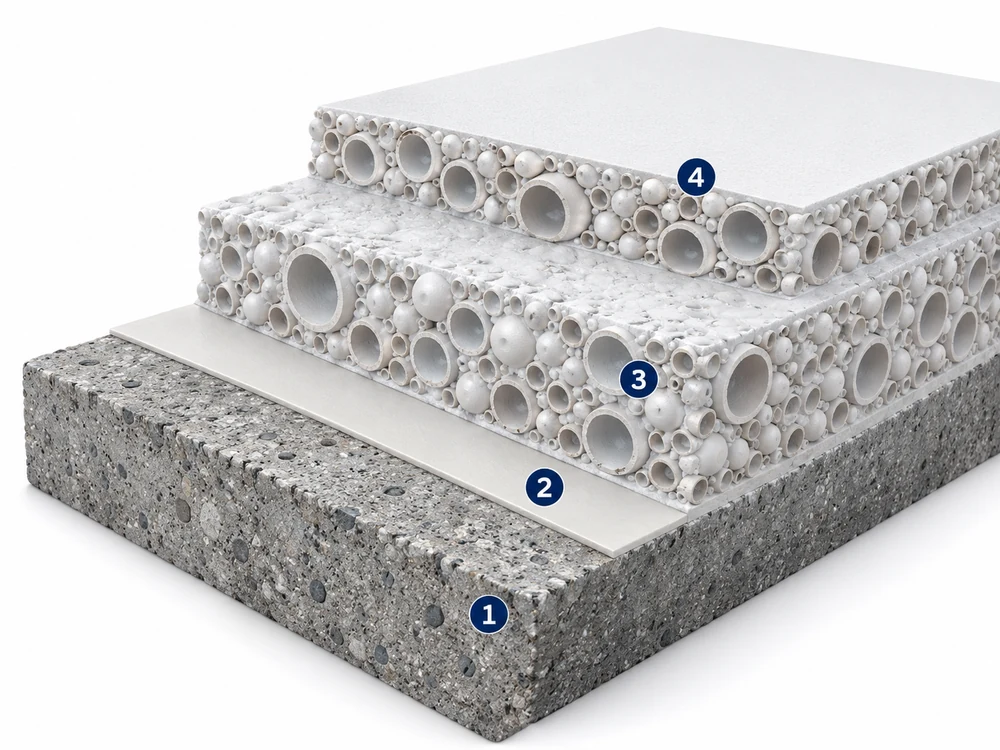
Three thin layers, one physical principle: heat is reflected at the surface, and heat conduction inside the material is significantly reduced by hollow ceramic nanospheres.
The system build-up
Total layer thickness: approx. 1 mm instead of centimetre-thick insulation boards.
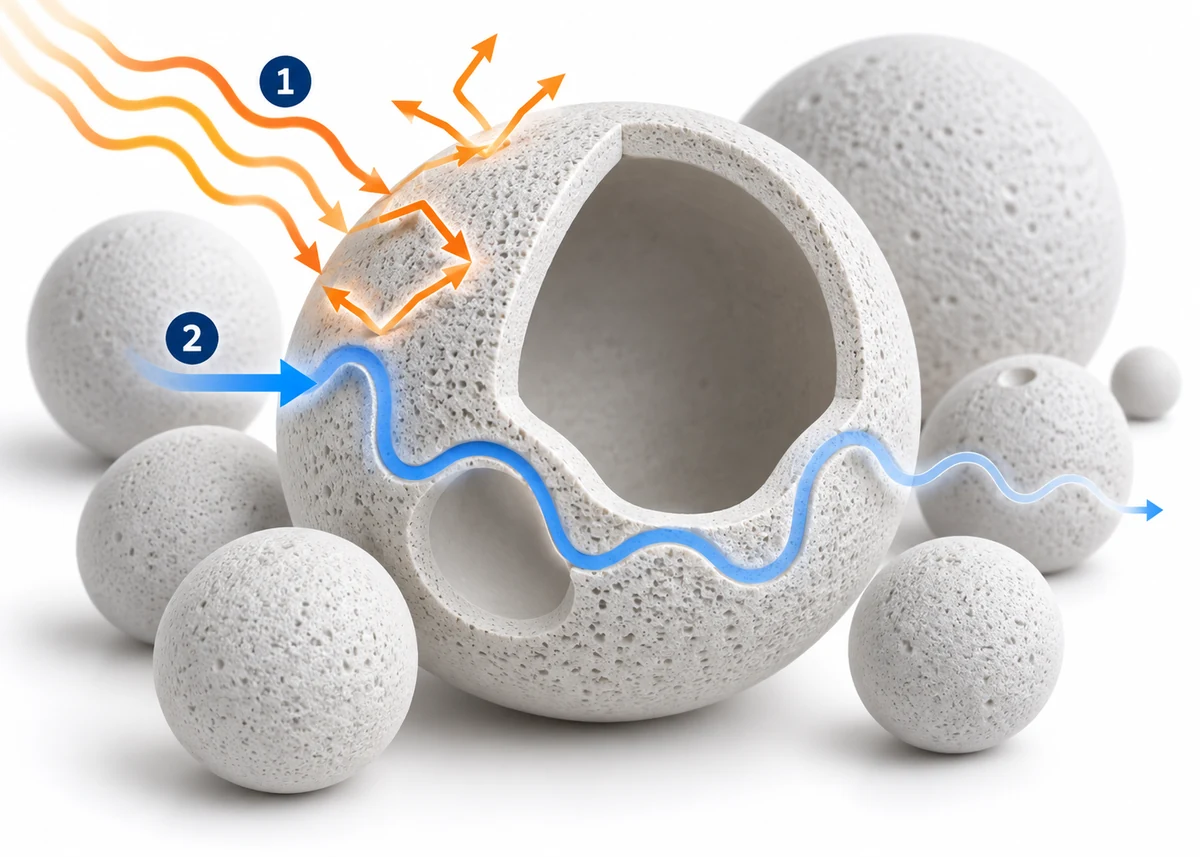
Two of three heat transfer modes specifically reduced
Heat transfers in three ways: radiation, conduction (heat transfer through materials) and convection (heat flow in gases/liquids). The coating specifically counters the first two — convection plays no role within a solid, closed material layer.
1. Radiant heat (reflection)
Radiant heat, such as heat from the sun, transfers without loss even through a vacuum. Most of this radiation is reflected directly at the surface before it can penetrate the substrate.
2. Conduction (heat transfer)
Conduction transfers heat through direct contact between neighbouring molecules. Inside the hollow ceramic nanospheres this continuous contact is missing — heat has to pass around every cavity and therefore takes a considerably longer path. These spheres are present in both the functional layer and the top coat.
The physics behind it is not new.
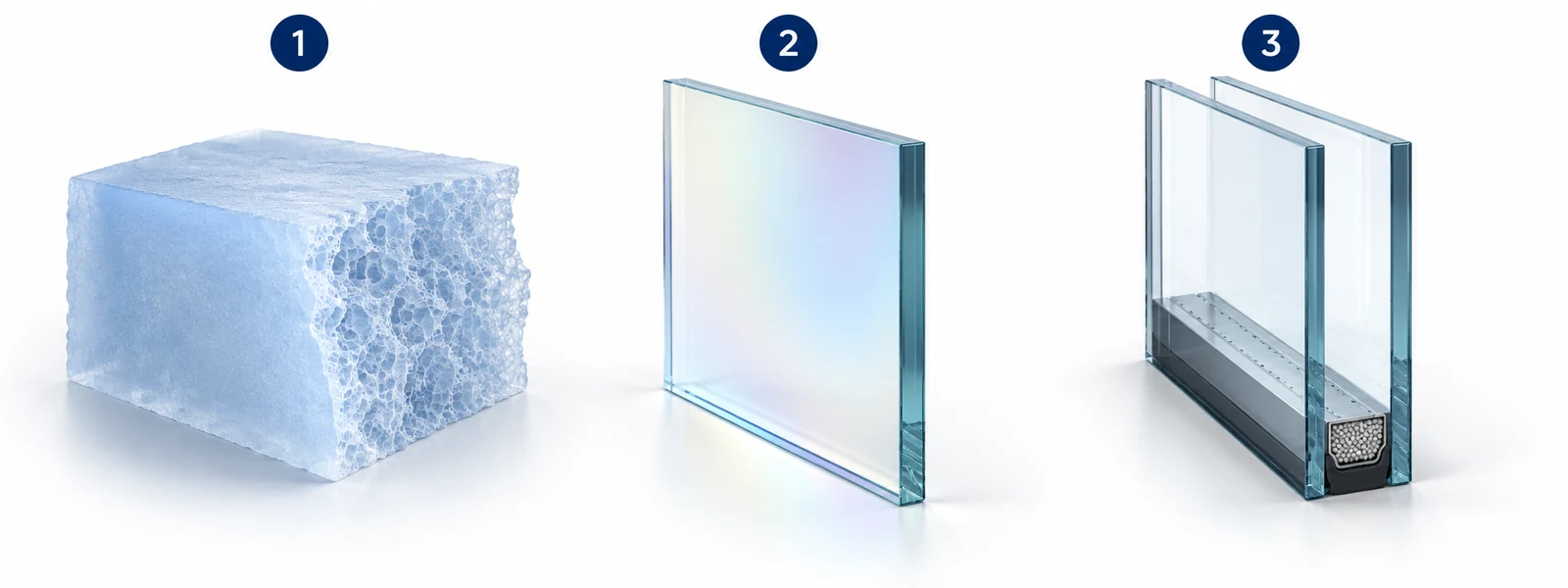
- 1 Aerogel Very small pores can influence the heat transport of the enclosed gas.
- 2 Solar control glass An extremely thin coating can reflect a large part of solar radiation.
- 3 Insulating glass The overall effect arises from several components and mechanisms.
Nano facade insulation uses several of these effects within a very thin functional layer and top coat. What this achieves on a specific wall can be measured on the complete building element.
These comparisons show that the underlying physical principles are established. They say nothing about the magnitude of the effect — that is what the measurements are for.
Six systems for every application
 FAS
FAS Facade
Insulation of the exterior facade with 1 mm layer thickness as an alternative to classic ETICS.
Details ansehen → BOD
BOD Floor
Nano-based floor insulation system that reflects radiant heat and reduces heat conduction through hollow ceramic nanospheres.
Details ansehen → INN
INN Interior
Interior insulation for rooms where exterior insulation is not possible.
Details ansehen → DACH
DACH Flat roof
Nano-based roof insulation system with a primer plus elastic and metal-compatible top coats for different roof coverings.
Details ansehen → IND
IND Industry
Insulation solution for industrial and commercial facilities with high durability requirements.
Details ansehen → BRA
BRA Fire protection
Insulating coating PSC 1200 T HP+ for steel structures, plants and industrial buildings.
Details ansehen →Strong partners for high quality.
Manufacturer

PSCoat Zurynski, Özdogan & Co. GmbH develops and manufactures the thermo-reflective nano coating with hollow ceramic nanospheres.
Trade & distribution

As a sales agent and licensed distributor, we provide the PSCoat coating system along with all product information, technical data and documentation for Nano facade insulation.
Installation

On-site installation — from substrate inspection to the finished coating — is carried out by our partner wirsanierendeutschland.de.
Technical information system.




Ready for your project?
Professional installation through our partner wirsanierendeutschland.de.