




Technology
Surfaces & Colors
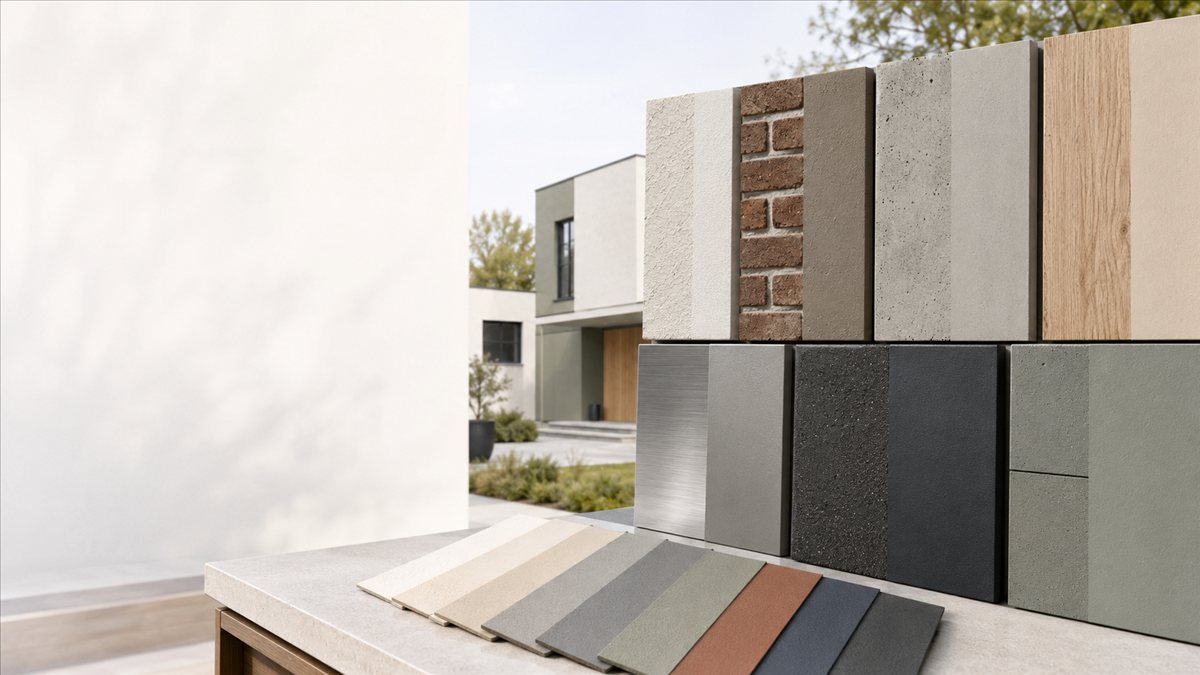
Nano facade insulation can be used on almost all common surfaces and, thanks to its special coating technology, adheres reliably to a wide variety of substrates — both indoors and outdoors.
 Suitable surfaces at a glance
- Rendered facades (mineral and resin-bound)
- Brick and masonry
- Concrete and fibre cement boards
- Wood surfaces (untreated or treated)
- Metal surfaces
- Plastics (depending on material type)
- Bitumen and roof surfaces
The existing surface can be preserved in most cases — costly removal is not necessary. The system build-up (primer, nano coating, top coat) ensures durable adhesion, high resistance and long-term function.
 Colour design
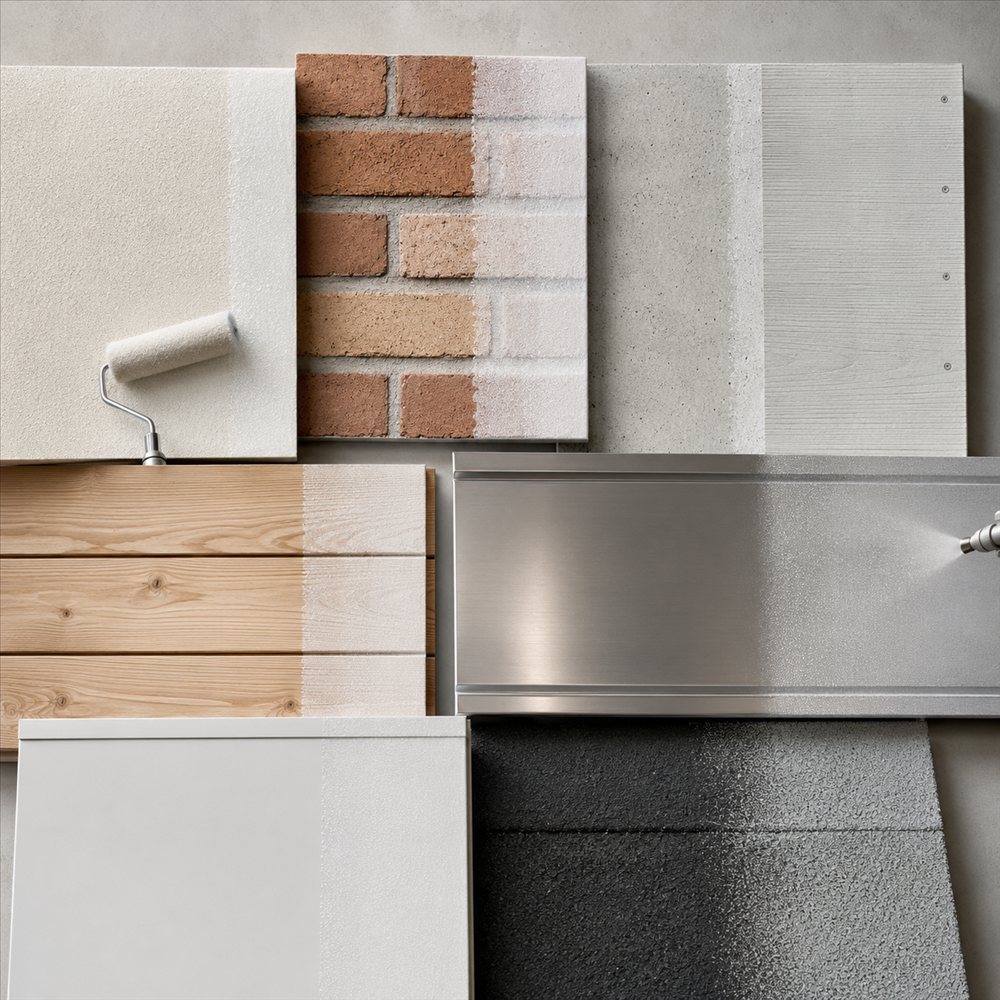
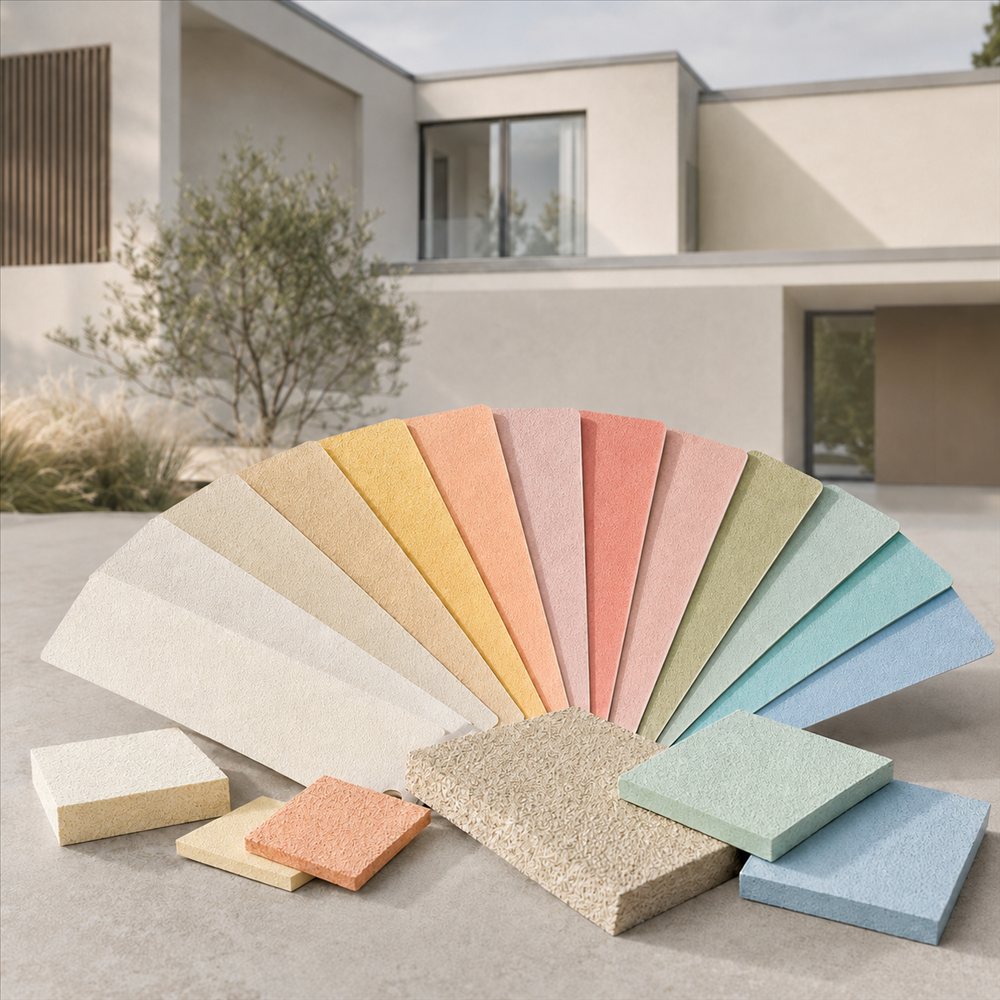
The top coat can be applied in almost any desired light shade — RAL shades on request, individual colour concepts for modern architecture, or classic facade shades for older buildings and renovation projects. No additional coating is required, since the insulating effect and the colour arise in a single work step.
The top coat is more than a protective layer: it contains the same hollow ceramic nanospheres as the functional layer and therefore contributes to the insulating effect — the larger share of which is carried by the functional layer. At the same time it protects the facade permanently: weather- and UV-resistant, high colour and surface durability, and resistant to dirt and environmental influences.
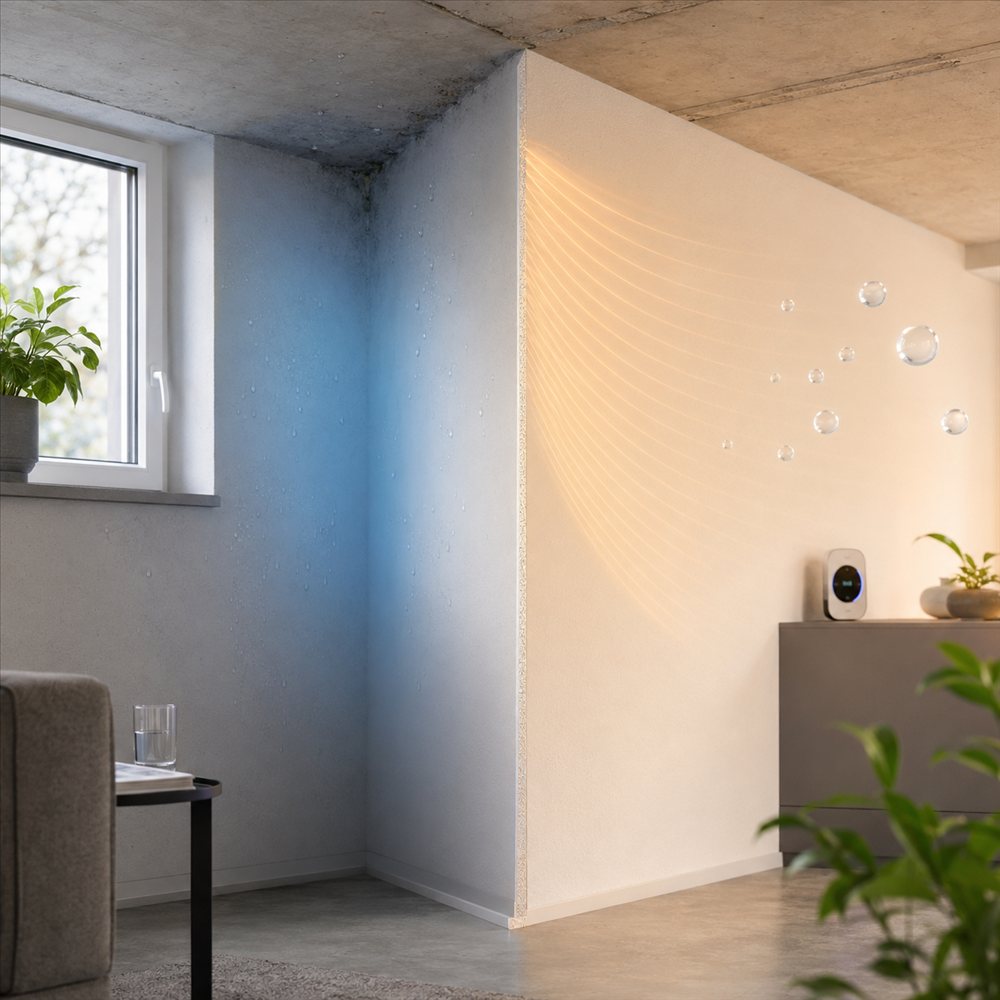
 Lower mould risk
The vapour-permeable coating regulates moisture better than classic insulation methods – as demonstrated in test reports. This reduces the risk of mould forming on the treated surface.