
Technology
Comparison to ETICS
Nano facade insulation is a modern alternative to classic facade insulation such as external thermal insulation composite systems (ETICS). While conventional systems work mainly through material thickness, Nano facade insulation is based on specifically influencing heat transfer through its material structure.

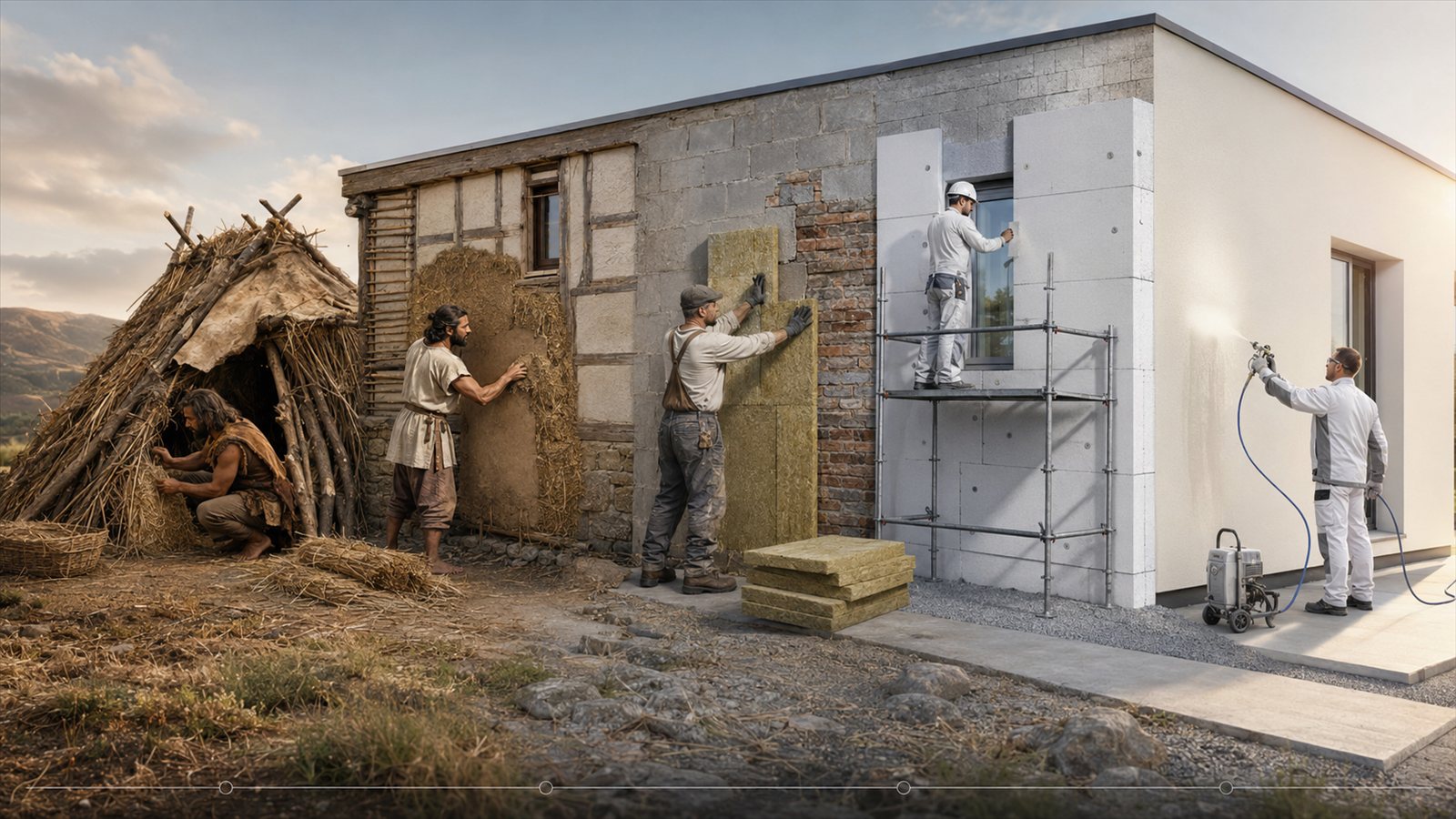
The key differences
Nano facade insulation: coating with approx. 1 mm layer thickness, no insulation boards required, direct application to existing facades, low structural effort.
Classic insulation (ETICS): insulation material thickness of approx. 10–20 cm, multi-layer build-up (boards, reinforcement, render), elaborate installation, adjustments to roof, windows and details required.
Areas of application compared
| Area of application | Nano facade insulation | ETICS |
|---|---|---|
| Older buildings | very well suited | limited |
| Listed buildings | well suited | often not possible |
| New builds | suitable | standard solution |
| Complex facades | very well suited | elaborate |
 Benefits for older buildings and renovation
Nano facade insulation shows its strengths especially in existing buildings: the facade appearance is preserved, walls are not made thicker, window reveals stay unchanged, and it is suitable for listed buildings. In these areas, ETICS is often only usable to a limited extent.
Important context
Nano facade insulation does not replace classic insulation measures in every case. Depending on the building, it can be an alternative, a complement, or a specific solution for particular requirements.